Why Skin Feels Different Over Time | Infinite Longevity
Why Skin Feels Different Over Time
Your skin may still look like your skin.
But it may not behave like it used to.
Products that once worked may suddenly feel too harsh. Your skin may feel drier after a shower. Makeup may sit differently. Fine lines may become more noticeable. A day in the sun may seem to leave more of a mark than it once did.
For women, these changes may feel especially noticeable around perimenopause and menopause.
That does not mean your skin has suddenly become unhealthy.
Skin changes over time because its structure, oil production, moisture retention, collagen, elasticity, hormones, and years of environmental exposure are all changing too.
Healthy skin does not mean skin that never changes. It means understanding what your skin needs now instead of treating it exactly the way you did ten years ago.
The Quick Answer
Skin can feel different over time because it gradually becomes thinner, produces less oil, retains moisture differently, and loses some collagen and elasticity. Hormonal changes, especially around menopause, can add to dryness and structural changes. Years of ultraviolet exposure also accumulate, affecting texture, pigmentation, wrinkles, and skin-cancer risk. (National Institute on Aging: Skin Care and Aging)
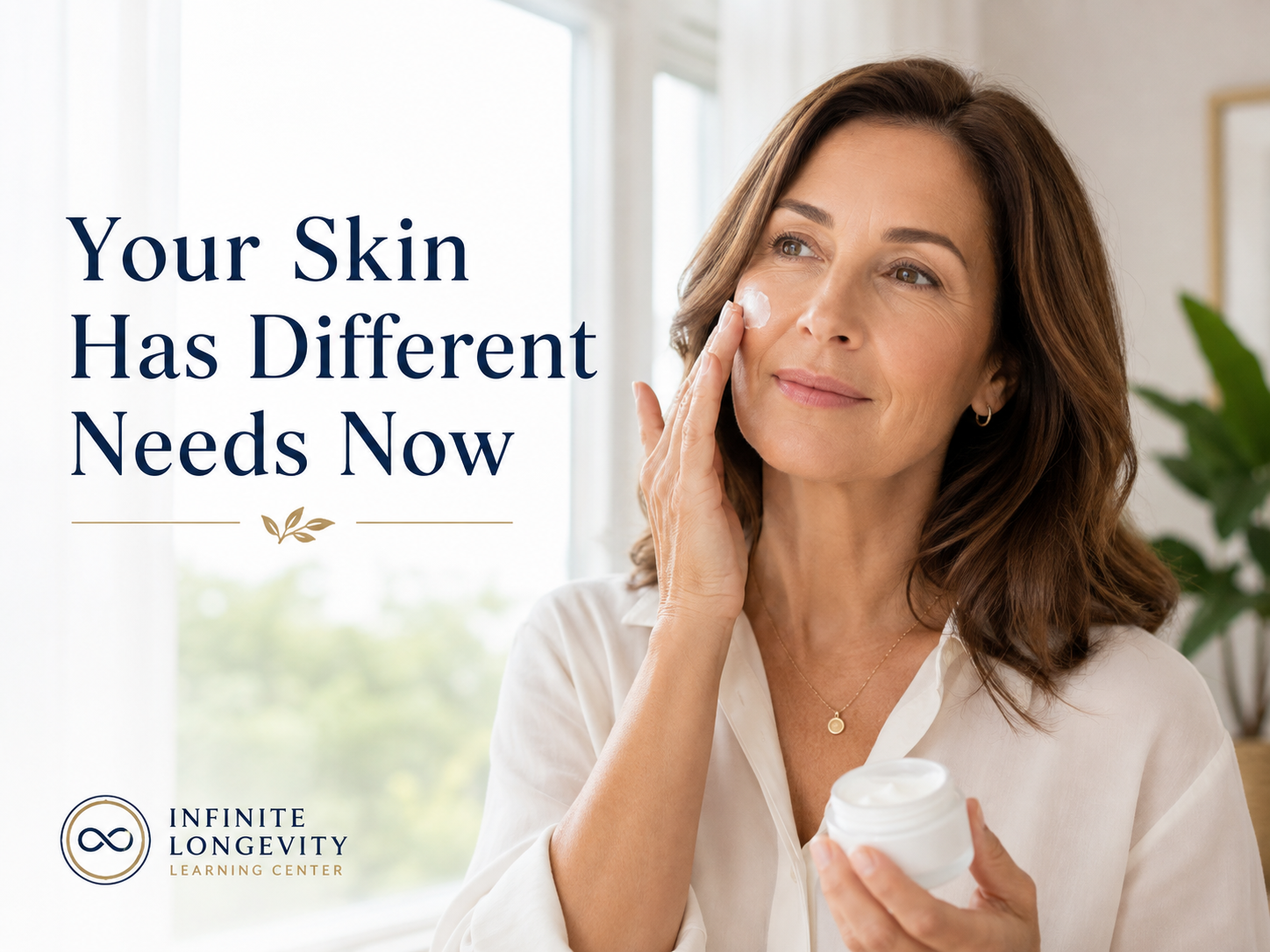
Alt text: Woman in her 50s applying moisturizer to naturally textured skin as part of a simple daily skin-care routine.
Skin Gets Thinner and Less Elastic
Skin has several layers, and those layers change gradually over time.
According to the National Institute on Aging, aging skin tends to become thinner, paler, and less elastic. Changes in collagen and elastin contribute to greater fragility, wrinkles, and changes in how smooth or firm skin appears.
Collagen provides structural support.
Elastin helps skin stretch and return toward its original shape.
As those structural components change, you may notice:
Fine lines becoming more visible
Skin feeling less firm
Changes around the eyes, jawline, or neck
Easier bruising
Slower healing
A thinner or more delicate feeling
These changes happen gradually and at different rates.
Genetics matter.
So do hormones, sun exposure, smoking, health conditions, and your overall environment.
That means two people of the same age may have very different skin.
Dryness Is Often About More Than Drinking Water
When skin feels dry, the immediate instinct is often:
“I need to drink more water.”
Hydration matters to overall health, but dry skin is not simply a sign that you forgot to drink enough water.
Skin also relies on oils and an effective outer barrier to keep moisture from escaping.
The American Academy of Dermatology notes that skin produces less sebum, its natural oil, with age. Production begins dropping substantially by the 40s and continues to decrease afterward.
That can leave skin feeling:
Tight
Rough
Flaky
Itchy
More sensitive after cleansing
Less comfortable in dry weather
Hot showers, harsh soaps, fragrances, dry air, and frequent washing can make the problem worse. The National Institute on Aging recommends mild cleansing, warm rather than hot water, and regular use of moisturizers for dry skin. (NIA: Skin Care and Aging)
Sometimes the smartest skin-care change is not adding another active ingredient.
It is becoming gentler.
Your Skin Barrier Matters More Than You May Realize
Think of the outer layer of your skin as a protective wall.
Its job is to help keep water in while keeping many irritants and environmental exposures out.
When that barrier is working well, skin tends to feel comfortable.
When it is disrupted, products may sting, skin may feel tight, and irritation can appear more easily.
Aging and hormonal changes may affect moisture retention and barrier function. Recent reviews of menopausal skin describe declines in hydration, skin lipids, and barrier performance as estrogen levels change. (Overview of Aging, Skin Health, Estrogen, Menopause and HRT)
This creates an important skin-care lesson:
More products are not always better.
Layering acids, scrubs, retinoids, peels, and other strong ingredients can overwhelm skin that has become less tolerant.
If your skin suddenly seems reactive, the first question might not be:
“What stronger product do I need?”
Try:
“Is my skin barrier asking me to do less?”
Menopause Can Change the Skin More Quickly
For women, the menopausal transition can add another layer to skin changes.
Estrogen influences collagen, hydration, thickness, and other aspects of skin structure. Reviews of menopausal skin research describe declines in collagen and elasticity as estrogen levels fall. (Menopause, Skin and Common Dermatoses)
A recent review also describes substantial collagen loss during the years around and after menopause, along with thinner, drier, and less elastic skin. (Overview of Aging, Skin Health, Estrogen, Menopause and HRT)
That may show up as:
Increased dryness
More visible fine lines
A change in firmness
Different facial contours
Increased sensitivity
Slower recovery after irritation
But menopause is not the only factor involved.
Sun exposure, genetics, stress, smoking, nutrition, sleep, medications, and skin-care habits still matter.
Hormones may change the starting conditions, but they do not suddenly erase everything else that affects your skin.
Where Peptide Research Fits Into Skin
Peptides are also being studied in skin care because some can act as signaling molecules or provide fragments related to structural proteins such as collagen.
Human studies of topical and oral peptide products have reported improvements in some measures such as hydration and wrinkle appearance, but the results are not consistent across every outcome or formulation. Recent reviews also note limitations including small studies, short durations, different product formulations, and study-quality concerns.
So “contains peptides” should not be treated as proof that a product will rebuild skin or reverse aging.
Continue learning: Read What Are Peptides, Really? to understand why the evidence for one peptide or formulation cannot automatically be applied to another.
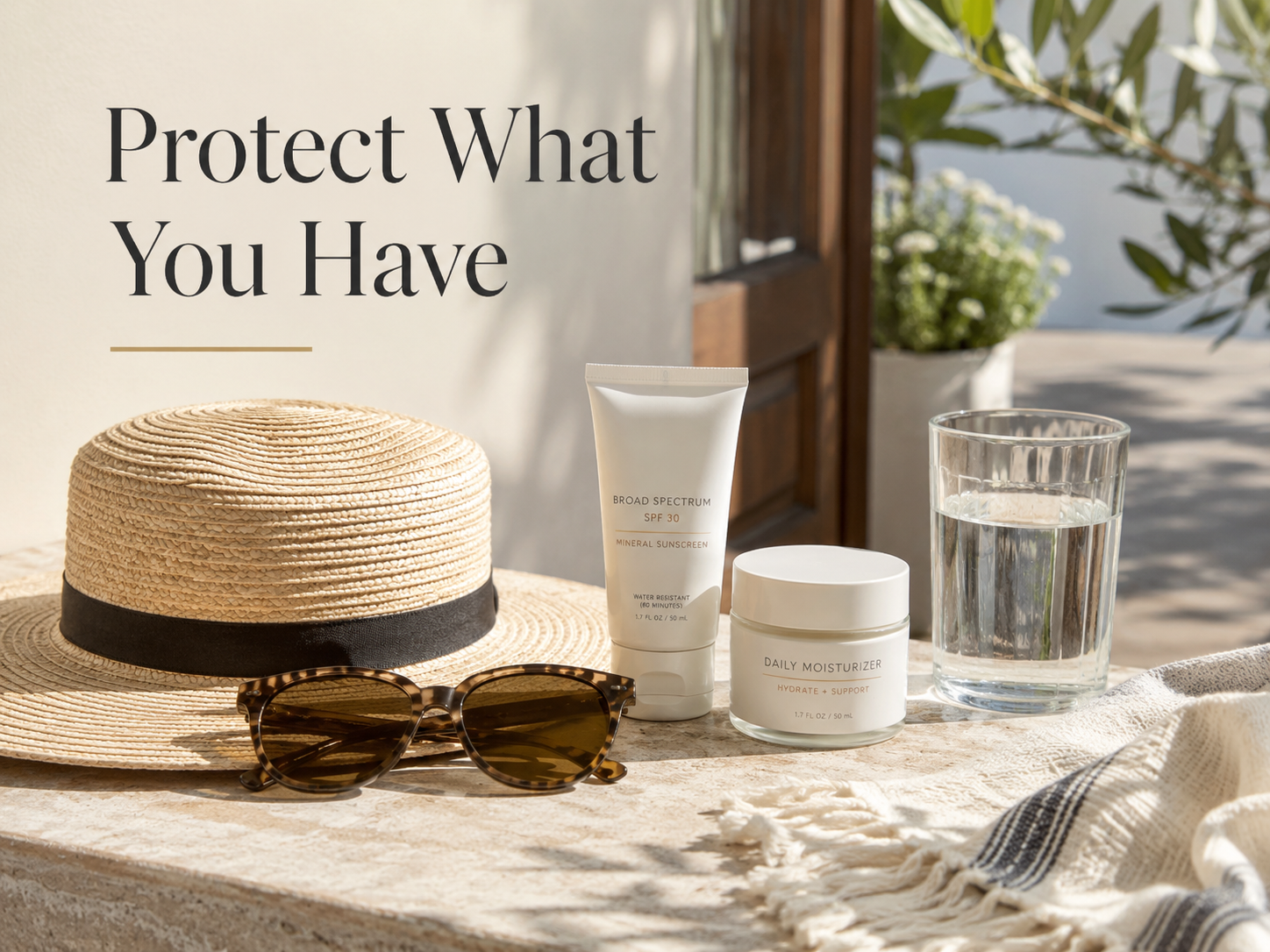
Alt text: Sun-protection and skin-care essentials including sunscreen, a hat, sunglasses, moisturizer, and water.
Sun Exposure Leaves a Long Memory
One of the biggest differences between skin aging and aging in many other organs is that skin is constantly exposed to the outside world.
Ultraviolet radiation from the sun damages skin cells.
The effects accumulate over time.
The National Institute on Aging identifies UV exposure as a major contributor to premature skin aging, wrinkles, texture changes, pigmentation, and skin cancer.
This is sometimes called photoaging.
You may see it most clearly in areas that have received the most lifetime exposure:
Face
Neck
Chest
Hands
Forearms
That also means sun protection is not merely cosmetic.
It is part of protecting skin health.
The American Academy of Dermatology emphasizes sun protection as one of the most important steps for reducing premature skin aging and helping lower skin-cancer risk.
And it is not too late to start.
Past sun exposure cannot be undone, but protecting skin now can reduce additional damage.
Expensive Does Not Automatically Mean Effective
Skin care is an enormous marketplace.
That makes it easy to confuse sophisticated packaging with strong evidence.
Many cosmetic products can improve hydration, temporarily plump the appearance of fine lines, or make skin feel smoother.
But claims such as:
“Reverses aging”
“Rebuilds skin from within”
“Restores youthful collagen”
“Turns back the clock”
deserve a closer look.
The National Institute on Aging notes that many anti-aging cosmetics are not required to undergo the same human testing or FDA approval process as drugs.
Even supplements deserve scrutiny.
For example, collagen supplements are heavily marketed for skin aging. A 2025 systematic review and meta-analysis found that apparent benefits were largely concentrated in industry-funded or lower-quality studies. When the researchers analyzed higher-quality or non-industry-funded studies, significant benefits were not found. (Effects of Collagen Supplements on Skin Aging)
That does not mean every cosmetic product is useless.
It means claims should match the quality of evidence.
What Actually Deserves Your Attention?
Healthy-looking skin rarely comes from one dramatic intervention.
The basics are less exciting, but they are much more repeatable.
The National Institute on Aging recommends several simple steps for supporting healthier skin, including sun protection, moisturizing, avoiding smoking, managing stress, and paying attention to changes in the skin. (NIA: Tips for Healthier Skin as You Age)
A reasonable foundation usually includes:
Gentle cleansing
Moisturizer appropriate for your skin
Regular sun protection
Avoiding tanning
Avoiding smoking
Consistent rather than constantly changing routines
Paying attention to new or changing spots
You can build from there based on what your skin actually needs.
What Has Changed in Your Skin?
Check anything that feels familiar:
☐ My skin feels drier or tighter than it used to.
☐ Products that once worked now sting or irritate me.
☐ My skin feels thinner or more delicate.
☐ I bruise more easily.
☐ Fine lines seem more noticeable.
☐ My skin feels less firm.
☐ Pigmentation or sun spots are becoming more noticeable.
☐ Hormonal changes seem to coincide with changes in my skin.
Now choose the one concern that bothers you most.
Not five.
Not your entire face.
One.
That makes it easier to decide what actually deserves attention.
One Practical Next Step: Simplify for Two Weeks
If your skin has become unpredictable, try simplifying before adding more products.
For two weeks, focus on the basics:
Morning
Gentle cleanse if needed
Moisturizer
Broad-spectrum sunscreen
Evening
Gentle cleanse
Moisturizer
If you already tolerate a dermatologist-recommended active ingredient well, you do not necessarily need to stop it.
The goal is to remove unnecessary irritation and see how your skin responds.
After two weeks, ask:
What actually improved?
Dryness?
Redness?
Comfort?
Texture?
Sensitivity?
That gives you a cleaner starting point before adding something new.
When to Speak With a Dermatologist
Skin changes are common.
But not every change should be assumed to be normal aging.
Talk with a dermatologist or qualified healthcare professional about:
A new or changing mole
A sore that does not heal
A spot that bleeds repeatedly
Rapidly changing pigmentation
Persistent itching
Severe dryness
Unexplained bruising
A recurring rash
Significant hair or nail changes
Painful or inflamed skin
A sudden major change in skin texture
The National Institute on Aging recommends regular attention to new or changing growths and highlights the ABCDE signs used to help identify possible melanoma. (NIA: Skin Care and Aging)
Frequently Asked Questions
Why is my skin suddenly so dry?
Skin naturally produces less oil over time, which can reduce its ability to keep moisture in. Hormonal changes, dry air, hot water, harsh cleansers, medications, and some health conditions may also contribute. (American Academy of Dermatology: Causes of Dry Skin)
Does menopause really affect collagen?
Yes. Estrogen is connected with collagen production and skin structure, and research shows that collagen declines around and after menopause. The amount and visible effect vary among individuals. (Menopause, Skin and Common Dermatoses)
Can skin aging be reversed?
Some aspects of appearance can improve with consistent skin care or medical treatment, but no product completely reverses biological aging. Sun protection, moisturizing, and evidence-based treatments can help protect skin and improve certain concerns. (American Academy of Dermatology)
Choose Your Next Guide
What Helps Skin Look Healthy, Not Perfect
https://infinite-longevity.com/post/what-helps-skin-look-healthy
Hair Shedding, Breakage, and Thinning Are Not the Same
https://infinite-longevity.com/post/hair-shedding-breakage-and-thinning
What Does Healthy Aging Really Mean?
https://infinite-longevity.com/post/what-does-healthy-aging-mean
Explore Skin, Hair & Appearance →
https://infinite-longevity.com/skin-hair-and-appearance
The Most Important Takeaway
Your skin is supposed to change over time.
That does not mean you have to ignore it.
And it does not mean you need to chase every new anti-aging product that appears.
Your skin may simply need a different approach than it did ten or twenty years ago.
Protect it.
Moisturize it.
Pay attention to it.
Use evidence when choosing what else to add.
The goal is not perfect skin.
It is healthy skin that works well and feels good to live in.
About Infinite Longevity
Infinite Longevity is an educational wellness platform focused on helping adults better understand the science, research, and practical factors connected to healthy aging, metabolic health, recovery, performance, and emerging peptide research.
Our Learning Center translates complex topics into clear, practical information using current government resources, peer-reviewed research, and recognized medical and scientific sources.
Our content is designed to support better questions and more informed conversations with qualified healthcare professionals. It is not intended to diagnose a condition, prescribe treatment, or replace personalized medical care.
Founded by Marcia Riner, Infinite Longevity was created to make complex wellness and longevity information easier to understand, evaluate, and use responsibly.
Sources
National Institute on Aging: Tips for Healthier Skin as You Age
American Academy of Dermatology: How to Maximize Results From Anti-Aging Skin Care
Effects of Collagen Supplements on Skin Aging: Systematic Review and Meta-Analysis
Important Notice
This guide is for general educational purposes only. It does not diagnose a skin condition, provide individual medical advice, recommend a cosmetic or medical treatment, or replace care from a qualified healthcare professional or dermatologist.
Speak with an appropriate licensed healthcare professional about new or changing skin lesions, persistent irritation, severe dryness, hormonal concerns, medications, cosmetic procedures, or other significant skin changes.