Why Weight Feels Different Over Time | Infinite Longevity
Why Weight Feels Different Over Time
You are eating many of the same foods.
You are still exercising.
You may even be working harder than you did a few years ago.
So why does your body seem to be playing by a different set of rules?
Perhaps weight settles in places it did not before. You feel hungrier later in the day. Your energy fades sooner. Workouts take longer to recover from. The strategy that once helped you lose a few pounds now produces very little change.
It is easy to assume you need more discipline.
But your effort may not be the only thing that has changed.
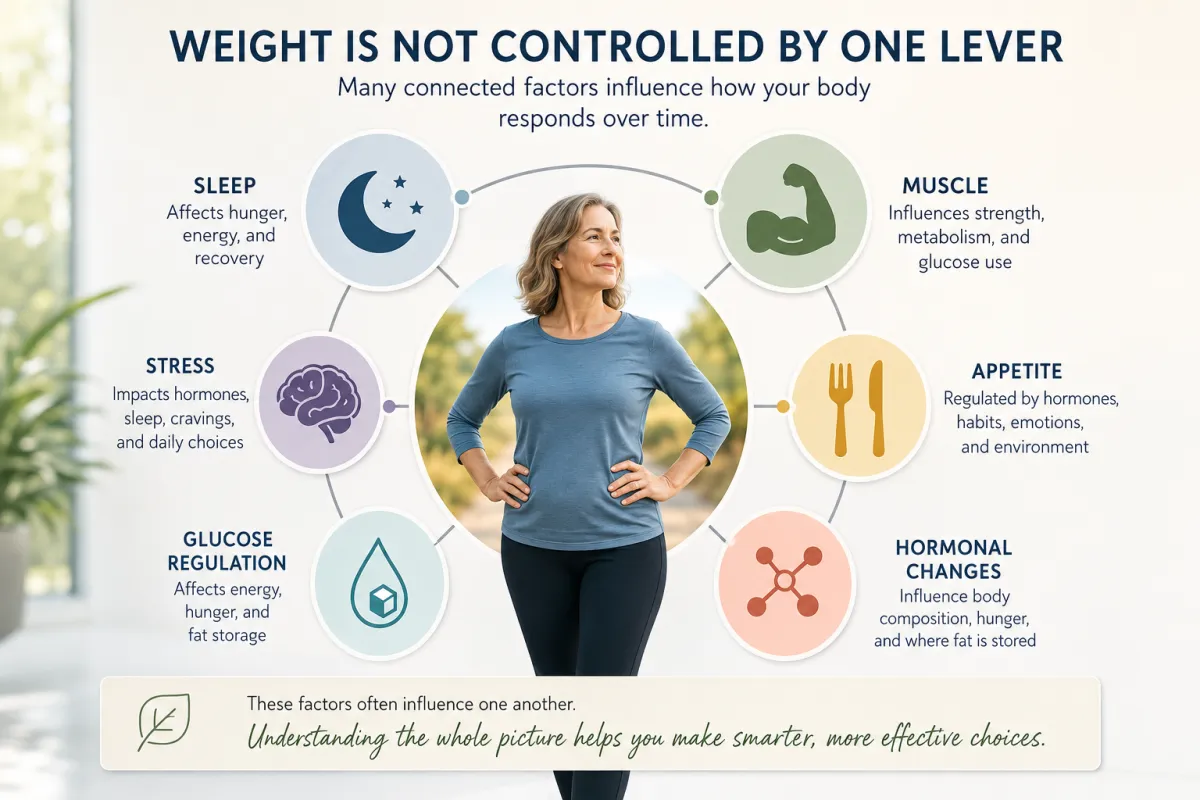
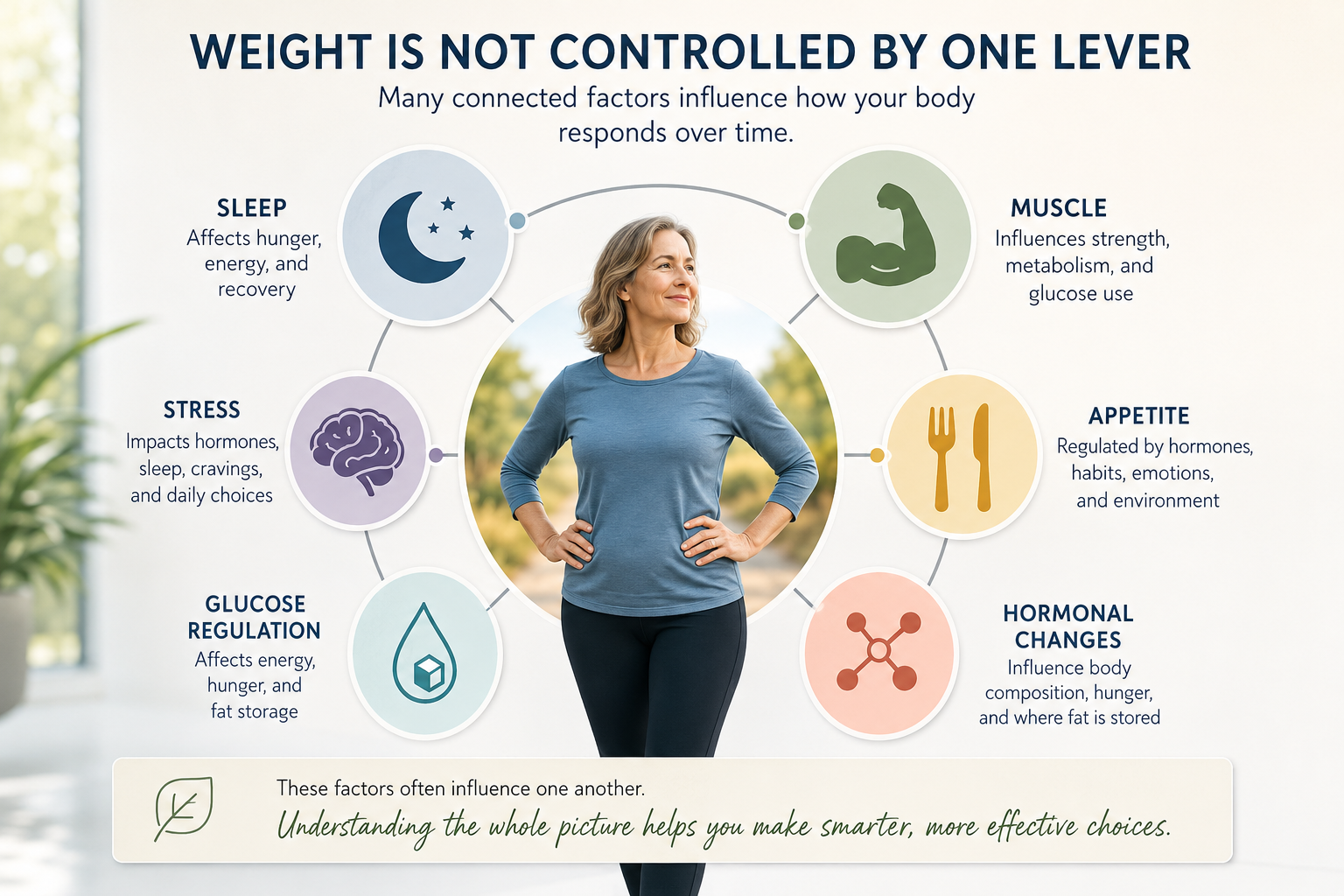
Sleep, stress, muscle mass, appetite signals, hormones, glucose regulation, medications, recovery, and everyday movement can all influence how your body responds.
When your body responds differently, the answer is not always more discipline. Sometimes the strategy needs to change.
The Quick Answer
Weight can feel harder to manage over time because several connected factors may be changing at once. These can include muscle mass, appetite, sleep, stress, hormonal patterns, glucose regulation, medications, recovery, and total daily movement.
Poor sleep may increase hunger. Lower energy may reduce movement. Less movement can affect strength and body composition. This is why “eat less and move more” rarely tells the whole story.
The Scale May Be Hiding Part of the Story
A bathroom scale tells you how much you weigh.
It does not tell you how much of that weight is muscle, fat, bone, or fluid. It cannot measure your strength, stamina, sleep quality, recovery, mobility, or how you feel throughout the day.
Your weight can remain fairly stable while your body composition changes.
You may notice:
Clothing fitting differently
A change in waist measurement
Less muscle definition
Reduced strength
Slower workout recovery
Everyday activities feeling harder
This is one reason the scale should not have the only vote.
A more useful question may be:
Is my body becoming stronger, healthier, and more capable?
That gives you more ways to recognize progress than waiting for one number to move.
Muscle Changes the Bigger Picture
Muscle is not just about appearance.
It helps you stand, walk, climb stairs, carry groceries, maintain balance, use glucose, recover from activity, and remain independent.
Muscle mass and strength commonly decline over time. The National Institute on Aging explains that age-related muscle loss can contribute to weakness, fatigue, and difficulty standing, walking, or climbing stairs. It also reports that strength training may help maintain muscle, mobility, and independence.
Current CDC physical activity guidelines for adults recommend muscle-strengthening activities that work all major muscle groups on at least two days each week. Adults age 65 and older are also encouraged to include activities that improve balance.
This does not mean everyone needs an intense gym routine.
Strength work can include resistance bands, handheld weights, machines, body-weight exercises, certain yoga movements, or other activities appropriate for your health and physical ability.
A plan focused entirely on calorie restriction and cardio may overlook this important part of long-term capability.
Appetite Is More Than Willpower
Hunger is not a character flaw.
Appetite is influenced by communication among the brain, digestive system, hormones, sleep, emotions, habits, food environment, and daily routine.
You may feel hungrier when:
You slept poorly
You skipped meals
Your meals were not satisfying
You are under more stress
You are awake longer
Your routine has changed
You are recovering from demanding activity
A medication or health condition affects appetite
Trying to overpower hunger every day can become exhausting.
A more useful approach is to notice when hunger is strongest, what happened before it appeared, and whether your meals leave you comfortably satisfied.
The next guide, Appetite Is More Than Willpower, explores these patterns in greater detail.
Sleep Can Change the Entire Next Day
A poor night of sleep does more than make you tired.
It can affect hunger, food choices, mood, energy, and how manageable your normal routine feels.
The National Institute of Diabetes and Digestive and Kidney Diseases reports that insufficient sleep is linked with weight gain and may make people feel hungrier, consume more calories, and choose less nutritious foods and beverages.
Think about the day after a difficult night.
Quick energy becomes more appealing. Cooking feels like more work. A planned workout is easier to skip. You may complete your morning exercise but sit more during the rest of the day because you are exhausted.
That does not make you lazy.
It means fatigue is influencing the choices available to you.
Ongoing insomnia, loud snoring, waking while gasping, or severe daytime fatigue deserves a conversation with a qualified healthcare professional.
Stress Can Quietly Rewrite Your Routine
Stress affects people differently.
Some people lose interest in food. Others feel hungrier, crave comfort foods, sleep poorly, or lose the mental energy needed to plan meals and exercise.
The NIDDK includes long-term stress, some medical conditions, medications, sleep, environment, and lifestyle habits among the many factors that may affect weight and health.
Stress can also create a frustrating loop:
You feel stressed.
You sleep poorly.
You wake tired.
Hunger and cravings feel stronger.
Movement feels harder.
You become frustrated with yourself.
The frustration adds more stress.
The food decision at the end of this loop may not be the best place to begin.
The more useful question is:
What was the first domino?
It may have been poor sleep, a skipped meal, an overloaded schedule, an afternoon energy crash, or a stressful situation.
Finding that starting point can help you choose a more practical response.

Hormones and Glucose May Also Play a Role
Hormonal transitions can influence sleep, appetite, energy, muscle, recovery, and where body fat is stored.
For women, menopause is associated with changes in body composition and a greater tendency for fat to accumulate around the abdomen. However, aging, activity, nutrition, sleep, genetics, and other health factors may also contribute.
The peer-reviewed review Weight, Shape, and Body Composition Changes at Menopause explains that menopause is associated with changes in body composition and increased accumulation of abdominal or visceral fat. It also notes that changes in energy expenditure, spontaneous activity, sleep, hormones, and other factors may be involved.
This does not mean weight gain is inevitable.
It also does not mean hormones explain every change.
Glucose regulation is another part of the metabolic picture. A healthcare professional may consider fasting glucose, A1C, blood pressure, cholesterol, triglycerides, waist measurement, family history, medications, activity, and sleep when evaluating metabolic health.
Body weight alone cannot tell you whether those markers are improving.
A person may see changes in strength, waist measurement, blood pressure, glucose markers, or energy before noticing a dramatic change on the scale.
Where Peptide Research Fits Into Metabolic Health
Peptide hormones already play an important role in normal metabolism. They help coordinate signals related to appetite, glucose regulation, digestion, and energy balance.
That biology is one reason peptide pathways have become such an active area of metabolic research.
But understanding a peptide pathway is not the same as proving that every peptide product connected to that pathway is safe, effective, or appropriate for human use. Evidence can range from established medications to early laboratory research depending on the specific compound.
Continue learning: Read What Are Peptides, Really? and What “Research Use Only” Actually Means.
You May Be Exercising but Moving Less
A scheduled workout is important, but it represents only one part of your day.
You may still exercise several times a week while moving less overall because:
Your work has become more sedentary
You work from home
You drive more
You stopped an active hobby
Pain or stiffness limits movement
You are tired after workouts
You sit through most evenings
The CDC’s guidance for adults encourages people to move more and sit less. It also notes that some activity is better than none and that weekly activity can be divided into smaller periods.
This does not mean you need to count every step.
It means your total movement pattern may have changed without attracting much attention.
Short walks, standing during phone calls, moving between meetings, or walking after a meal may help make the day less sedentary. These small periods do not replace a complete exercise plan, but they can support a more active routine.
What Has Changed for You?
Check the statements that feel familiar:
☐ My waistline has changed even though my weight is similar.
☐ I feel hungrier in the afternoon or evening.
☐ I wake during the night or rarely feel fully rested.
☐ I exercise, but sit for much of the remaining day.
☐ I have lost strength or muscle tone.
☐ I recover more slowly after workouts.
☐ Stress affects when or what I eat.
☐ My hormones, medications, or health conditions have changed.
Choose the one or two changes that stand out most.
You do not need to fix everything at once. You are looking for a useful starting point.
One Practical Next Step
For the next seven days, observe one normal week.
Briefly note:
Sleep quality
Morning and afternoon energy
When hunger feels strongest
Intentional exercise
Movement outside exercise
Stress
Soreness or recovery
At the end of the week, ask:
What pattern appeared more than once?
Then choose one small adjustment to test.
That might mean protecting your sleep schedule, adding a short walk, planning a more satisfying lunch, discussing symptoms with a healthcare professional, or adding appropriate strength work.
Choose one experiment, not an entirely new life.
When to Speak With a Healthcare Professional
Seek professional guidance when changes in weight or body composition are rapid, unexplained, persistent, or accompanied by symptoms such as:
Significant fatigue
Muscle weakness
Excessive thirst
Frequent urination
Major appetite changes
Unexplained weight loss
Swelling
Persistent digestive symptoms
Severe sleep disruption
Symptoms following a medication change
A qualified healthcare professional can help evaluate medications, medical conditions, sleep problems, hormonal changes, nutritional concerns, and other contributing factors.
Do not stop medications or begin a new medical treatment based on an article.
Frequently Asked Questions
Why am I gaining weight when I eat much the same way?
Your eating habits may be similar while other factors have changed. Muscle mass, total movement, sleep, stress, hormones, medications, recovery, and energy needs may all influence how your body responds. The NIDDK identifies sleep, medicines, health conditions, genes, environment, food habits, and activity as factors that may affect weight.
Does metabolism slow down with age?
Body composition and energy needs can change over time, particularly when muscle mass, activity, sleep, hormones, and recovery patterns change. The issue is usually more complex than metabolism simply “shutting down.”
Should I track weight or body composition?
Weight can be useful, but it does not show strength, muscle, fat distribution, energy, mobility, or recovery. Waist measurement, strength, sleep, energy, health markers, and consistency with healthy routines may provide useful additional context.
Choose Your Next Guide
If hunger is your biggest challenge:
Read Appetite Is More Than Willpower.
If strength or body composition has changed:
Read Why Muscle Matters More Than Most People Realize.
If several areas seem connected:
Return to the Weight & Metabolic Health pathway.
Related Reading
Appetite Is More Than Willpower
https://infinite-longevity.com/post/appetite-is-more-than-willpower
Why Muscle Matters More Than Most People Realize
https://infinite-longevity.com/post/why-muscle-matters
What Does Healthy Aging Really Mean?
https://infinite-longevity.com/post/what-does-healthy-aging-mean
Explore Weight & Metabolic Health →
The Most Important Takeaway
Your effort still matters.
But effort is only one part of the outcome.
When your body begins responding differently, you do not need another lecture about discipline.
You need better information.
Look at what has changed. Notice the patterns. Choose one useful action. Then evaluate how your body responds.
That is a stronger place to begin.
Sources
Important Notice
This guide is for general educational purposes only. It does not diagnose a medical condition, provide individual medical advice, recommend treatment, prescribe a product, or replace care from a qualified healthcare professional.
Speak with an appropriate licensed healthcare professional about symptoms, medications, laboratory testing, exercise safety, hormonal concerns, or changes to your health plan.