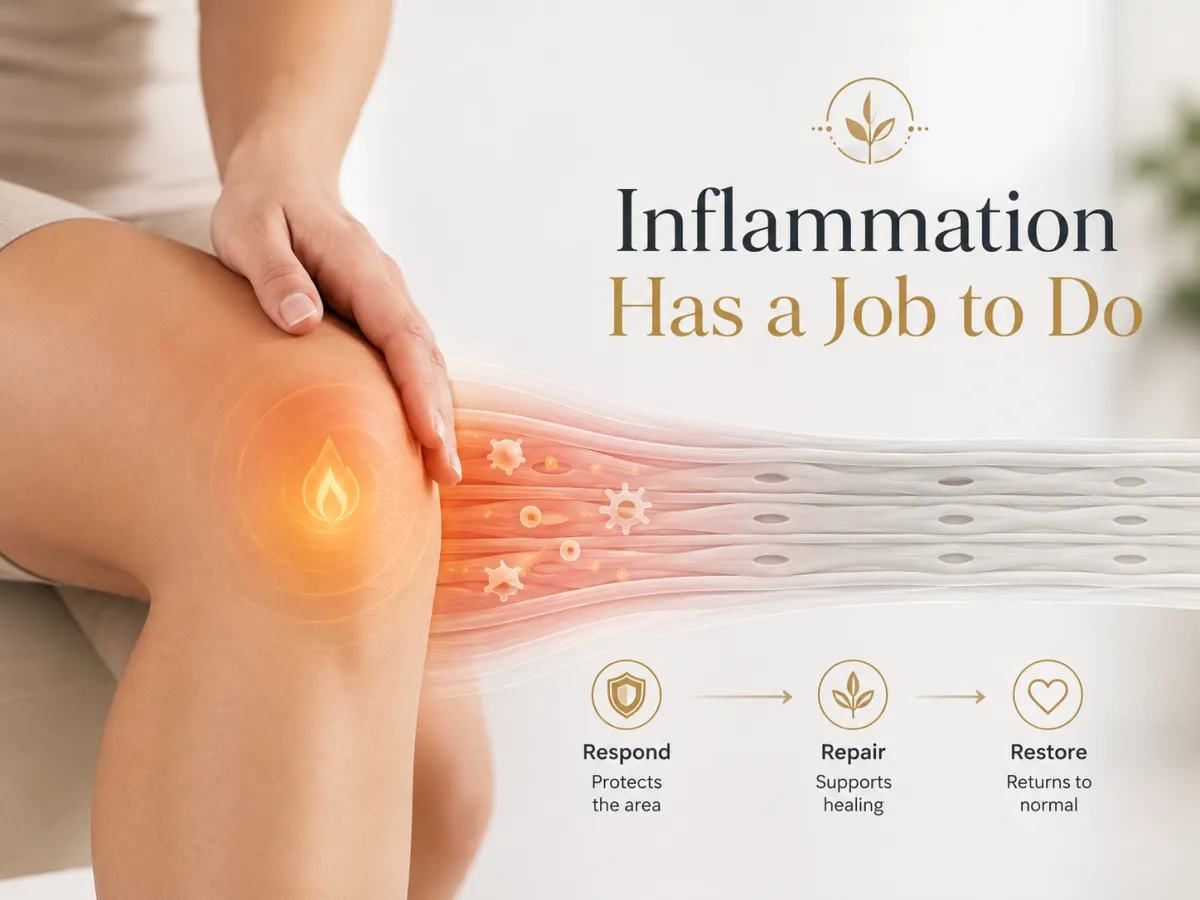
Inflammation Is Not Always the Enemy | Infinite Longevity
Inflammation Is Not Always the Enemy
The word inflammation has become something we are taught to fear.
Anti-inflammatory foods.
Anti-inflammatory supplements.
Anti-inflammatory diets.
Lower inflammation.
Fight inflammation.
It can start to sound as if inflammation itself is always a problem.
It is not.
Inflammation is part of the body’s normal response to injury, infection, and physical stress. In the short term, it helps coordinate defense, repair, cleanup, and recovery.
The real concern is when inflammation becomes excessive, poorly regulated, or persists when the original problem should have resolved.
Inflammation is not automatically harmful. The bigger question is whether the response is appropriate, temporary, and able to resolve.
The Quick Answer
Acute inflammation is a normal protective response to injury, infection, and other stressors. It helps recruit immune cells and coordinate tissue repair. Problems can develop when inflammation remains active for too long or becomes chronically elevated. Research on aging also describes a persistent low-grade inflammatory state called “inflammaging,” which is associated with several age-related health conditions. (pubmed.ncbi.nlm.nih.gov)
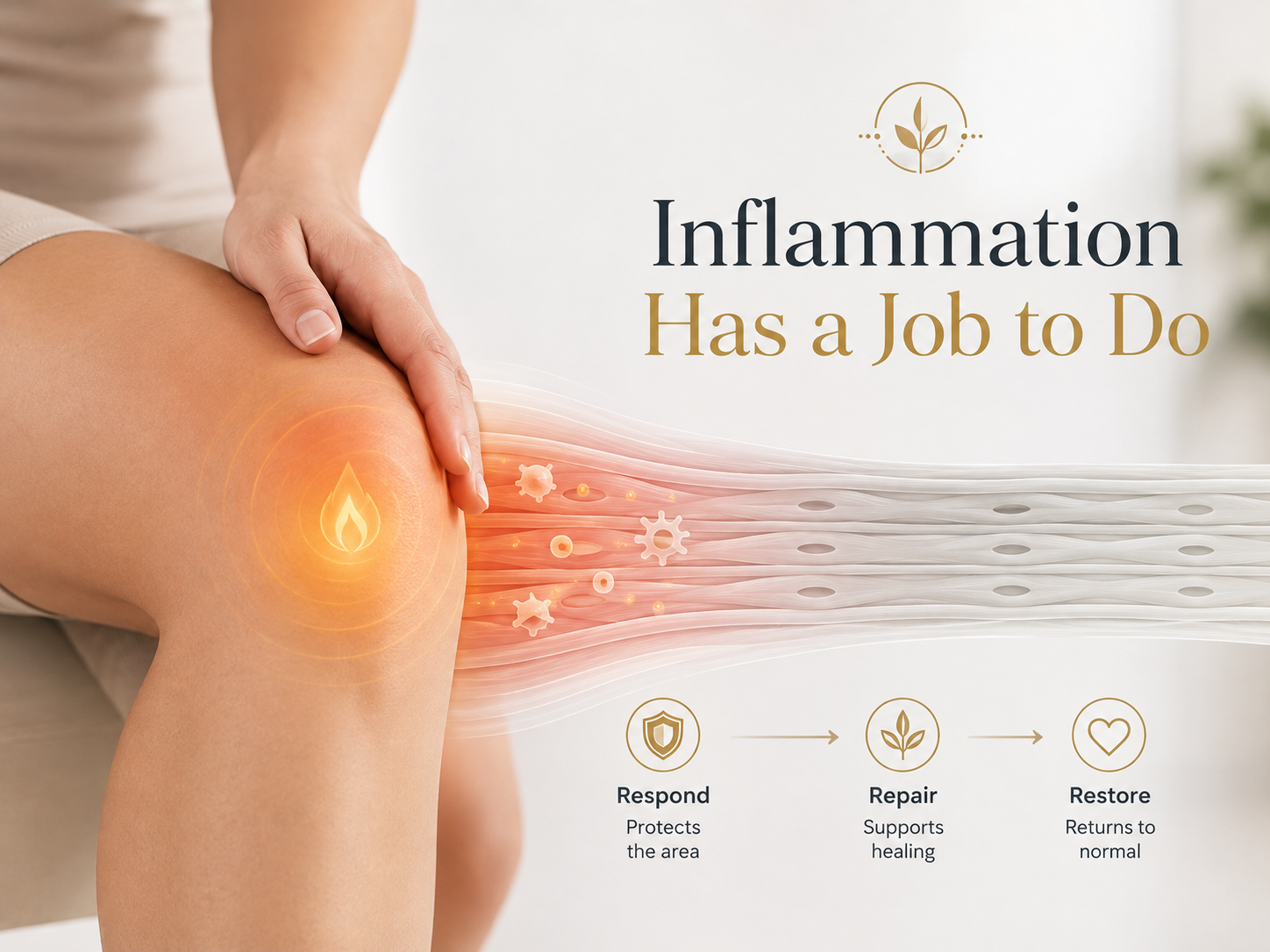
Alt text: A mild inflammatory response around injured tissue showing inflammation as part of normal repair and recovery.
Acute Inflammation Is Part of the Repair Process
When tissue is injured or the body detects a threat, the immune system responds.
Blood flow changes.
Immune cells move into the area.
Chemical signals help coordinate cleanup and repair.
A 2024 review describes acute inflammation as one of the body’s first defenses against injury and pathogens. When that response resolves normally, tissue can return toward balance. When resolution fails, inflammation may persist and contribute to chronic problems. (pmc.ncbi.nlm.nih.gov)
This is why common signs such as:
Warmth
Redness
Mild swelling
Tenderness
can occur after an injury.
Those signs are not always evidence that the body is malfunctioning.
Sometimes they mean the repair process is underway.
Exercise Can Trigger Inflammation Too
A challenging workout creates physical stress.
That stress can temporarily disrupt muscle tissue, particularly when the activity is unfamiliar or includes a lot of eccentric muscle action, where the muscle produces force while lengthening.
Researchers have found that the inflammatory response following exercise-induced muscle damage contributes to muscle repair and regeneration. (pubmed.ncbi.nlm.nih.gov)
That means some post-exercise inflammation is not simply something to eliminate.
It is part of how the body responds to training.
A more recent review published in 2025 similarly describes exercise-induced inflammation as an important part of muscle-fiber repair and adaptation while noting that excessive or persistent inflammation may interfere with recovery. (pubmed.ncbi.nlm.nih.gov)
So the goal is not:
No inflammation after exercise.
The goal is:
An appropriate response that resolves as recovery occurs.
Soreness Does Not Tell You Exactly How Inflamed You Are
Soreness is easy to feel.
Inflammation is harder to interpret.
That can lead people to assume:
More soreness = more inflammation.
The relationship is not that simple.
Exercise research evaluates several different things after training, including:
Muscle soreness
Loss of strength
Swelling
Creatine kinase
C-reactive protein
Cytokines
Other inflammatory markers
These measures do not always move together.
The degree of muscle damage and recovery depends on factors such as exercise intensity, duration, muscle group, training experience, and the type of movement performed. (pubmed.ncbi.nlm.nih.gov)
You can therefore be sore without having a dangerous inflammatory problem.
And you can have chronic inflammatory activity without feeling sore at all.
Inflammation is a biological process, not a sensation you can accurately measure by how achy you feel.
The Body Also Has a Resolution Process
Inflammation is not supposed to stay switched on indefinitely.
The immune system has active processes that help bring the inflammatory response toward resolution.
This is more sophisticated than simply “turning inflammation off.”
Certain immune cells and signaling molecules change roles as tissue moves from defense and cleanup toward repair and restoration.
Researchers increasingly study specialized molecules involved in this resolution phase because failure to resolve an inflammatory response can contribute to persistent inflammation and tissue dysfunction. (pmc.ncbi.nlm.nih.gov)
That gives us a better way to think about inflammation.
Not:
Inflammation = bad
But:
Trigger → response → repair → resolution
Problems become more concerning when that cycle gets stuck.
Where Peptide Research Fits Into Inflammation
Some of the signals that help coordinate inflammation, immune activity, tissue repair, and resolution involve peptides and other signaling molecules.
That has made peptide biology an active area of research in inflammation and recovery.
But there is an important distinction between understanding a biological signaling pathway and proving that a particular peptide can safely improve an inflammatory condition in people.
Depending on the compound, the evidence may range from laboratory research to animal studies to human clinical trials. Those levels of evidence should not be treated as interchangeable.
So when a peptide is described online as “anti-inflammatory,” the useful next question is:
What kind of research actually supports that claim?
Continue learning: Read What Are Peptides, Really?, What “Research Use Only” Actually Means, and What Laboratory Testing Can and Cannot Prove.
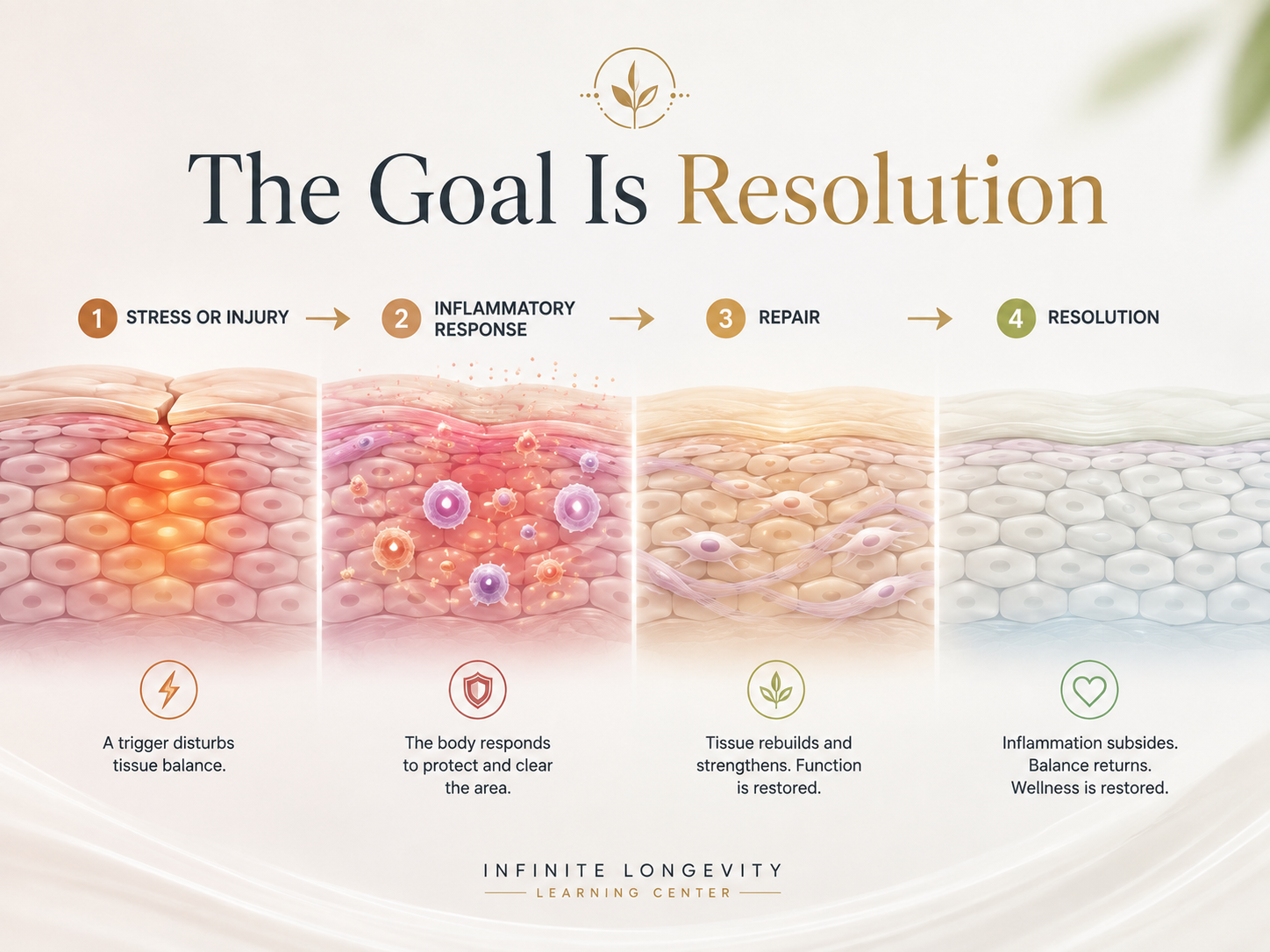
Alt text: Four-stage recovery process showing injury, inflammation, tissue repair, and resolution.
Chronic Inflammation Is Different
Short-term inflammation following a cut, infection, or demanding workout is different from persistent low-grade inflammation.
Chronic inflammation can occur when inflammatory signaling remains active over extended periods.
That may be connected with:
Ongoing infection
Autoimmune disease
Excess adipose tissue
Smoking
Metabolic disease
Chronic stress
Environmental exposures
Certain inflammatory conditions
Aging itself is also associated with changes in immune regulation.
Researchers use the term inflammaging to describe the chronic, low-grade inflammatory state observed more commonly with advancing age. A 2024 review notes that this persistent immune activation is associated with frailty, disability, and several age-related diseases. (pubmed.ncbi.nlm.nih.gov)
That does not mean inflammation is simply an inevitable disease of aging.
It means the immune system and the mechanisms that normally regulate inflammation change over time.
One Blood Test Does Not Diagnose “Inflammation”
It is increasingly common to see inflammation discussed as though one laboratory number can reveal your entire inflammatory status.
That is rarely true.
C-reactive protein, often shortened to CRP, is one marker associated with inflammation.
But inflammatory markers can rise for many reasons, including:
Infection
Injury
Surgery
Chronic disease
Recent exercise
Other medical conditions
A laboratory value needs context.
The same principle applies to many cytokines and other inflammatory biomarkers used in research.
They can provide useful information.
They do not independently explain why inflammation is present.
This is why inflammatory blood tests should be interpreted by a healthcare professional in the context of symptoms, medical history, other laboratory results, and the reason the test was ordered.
Should You Always Try to Reduce Exercise Inflammation?
Not necessarily.
This is where the wellness conversation can get too simplistic.
If a normal inflammatory response helps coordinate repair, automatically suppressing every part of it may not always be desirable.
Researchers have investigated strategies such as:
Cold-water immersion
Massage
Compression
Active recovery
Cryotherapy
Anti-inflammatory medications
Supplements
A systematic review of 99 studies found that several recovery techniques reduced soreness or inflammatory markers after exercise, but responses differed substantially depending on the intervention and outcome measured. (pubmed.ncbi.nlm.nih.gov)
Reducing a marker is not automatically the same thing as improving long-term adaptation.
This is particularly important if you routinely use anti-inflammatory medications simply to avoid normal post-workout discomfort.
Medication decisions should be individualized with a qualified healthcare professional.
Recovery Is About Balance, Not Erasing the Response
If your workout was challenging enough to create an adaptation, your body has work to do afterward.
Useful recovery still comes back to the basics:
Appropriate training load
Adequate sleep
Enough nutrition
Adequate hydration
Time between demanding sessions
Gradual progression
Managing medical conditions
Adjusting when something hurts rather than improves
The goal is not to prevent your body from responding to training.
It is to give that response enough resources and time to complete its job.
Lifestyle Can Influence Chronic Inflammatory Risk
There is no single “anti-inflammatory lifestyle.”
But many habits associated with lower chronic disease risk also influence the biological environment in which chronic inflammation develops.
The CDC emphasizes several modifiable risk factors for chronic disease, including smoking, poor nutrition, physical inactivity, and excessive alcohol use. (cdc.gov)
A review of aging and inflammation also notes that lifestyle interventions, including physical activity and dietary patterns, may influence chronic inflammatory processes. (pubmed.ncbi.nlm.nih.gov)
That does not mean one meal or one workout “turns off inflammation.”
It means your long-term pattern matters more than chasing one anti-inflammatory ingredient.
Be Careful With “Anti-Inflammatory” Supplement Claims
Inflammation is an attractive marketing target because almost everyone has experienced soreness, stiffness, fatigue, or discomfort.
That makes it easy to sell the idea that a supplement is “fighting inflammation.”
But lowering one biomarker in a small study does not necessarily mean:
Better health
Faster recovery
Less disease
Better performance
Longer life
Recent reviews of supplements marketed for exercise recovery continue to find mixed and often low-certainty evidence.
For example, a 2026 systematic review of curcumin supplementation found inconsistent effects across inflammation, muscle damage, soreness, recovery, and performance, with the certainty of evidence rated low or very low for several outcomes. (pubmed.ncbi.nlm.nih.gov)
That does not mean curcumin or other compounds have no biological effects.
It means marketing certainty often moves faster than research certainty.
What Kind of Inflammation Are You Thinking About?
Before trying to “reduce inflammation,” ask what you actually mean.
Normal soreness after unfamiliar exercise
A recent injury
Swelling that is improving
Persistent joint pain
A diagnosed inflammatory condition
Elevated bloodwork
Fatigue without a clear explanation
Something marketed to me as “inflammation”
These situations are not interchangeable.
Your next step should depend on which one you are dealing with.
One Practical Next Step: Ask Whether It Is Resolving
When discomfort follows a workout or minor strain, track the direction of change.
Over the next few days, ask:
Is soreness improving?
Is swelling decreasing?
Is movement becoming easier?
Is strength returning?
Is the area less tender?
If the trend is moving toward normal, your body may simply be progressing through recovery.
If symptoms are becoming worse rather than better, that deserves more attention.
This is a better question than:
“How do I shut down inflammation as quickly as possible?”
Try:
“Is the response resolving the way I would expect?”
When to Speak With a Healthcare Professional
Seek medical guidance when inflammation-like symptoms include:
Severe or increasing swelling
Significant redness or warmth that continues to spread
Fever
Severe pain
Difficulty bearing weight
Joint swelling that persists
Symptoms affecting multiple joints
Unexplained persistent fatigue
Recurrent inflammation without a clear trigger
Unexplained abnormal inflammatory blood markers
Symptoms that continue getting worse rather than improving
Sudden severe symptoms, difficulty breathing, swelling of the face or throat, chest pain, or signs of a serious allergic reaction require urgent medical attention.
Frequently Asked Questions
Is inflammation always bad?
No. Acute inflammation is a normal protective response involved in defense and tissue repair. Problems are more likely when inflammation becomes excessive, poorly regulated, or persistent. (pmc.ncbi.nlm.nih.gov)
Is soreness after exercise caused by inflammation?
Inflammation is one part of the response to exercise-induced muscle damage, but soreness is influenced by several biological processes and does not precisely measure the amount of inflammation present. (pubmed.ncbi.nlm.nih.gov)
What is inflammaging?
Inflammaging is a term researchers use for the persistent low-grade inflammatory state associated with aging. It is linked with changes in immune regulation and is associated with several age-related diseases and functional decline. (pubmed.ncbi.nlm.nih.gov)
Choose Your Next Guide
If recovery seems slower than it used to:
Read Why Recovery Takes Longer Than It Used To.
If strength and training are your focus:
Read Why Muscle Matters More Than Most People Realize.
To explore the full pathway:
Return to Inflammation & Recovery.
The Most Important Takeaway
Inflammation is not something your body simply forgot how to avoid.
It is part of its defense and repair system.
Sometimes inflammation is useful.
Sometimes it persists too long.
Sometimes it signals a medical problem that deserves attention.
The useful question is not:
“How do I eliminate inflammation?”
Ask:
“Why is this inflammatory response happening, and is it resolving appropriately?”
That distinction changes the conversation.
Related Reading
Why Recovery Takes Longer Than It Used To
https://infinite-longevity.com/post/why-recovery-takes-longer
Why Muscle Matters More Than Most People Realize
https://infinite-longevity.com/post/why-muscle-matters
What Does Healthy Aging Really Mean?
https://infinite-longevity.com/post/what-does-healthy-aging-mean
Explore Recovery & Inflammation →
https://infinite-longevity.com/recovery-inflammation
About Infinite Longevity
Infinite Longevity is an educational wellness platform focused on helping adults better understand the science, research, and practical factors connected to healthy aging, metabolic health, recovery, performance, and emerging peptide research.
Our Learning Center translates complex topics into clear, practical information using current government resources, peer-reviewed research, and recognized medical and scientific sources.
Our content is designed to support better questions and more informed conversations with qualified healthcare professionals. It is not intended to diagnose a condition, prescribe treatment, or replace personalized medical care.
Founded by Marcia Riner, Infinite Longevity was created to make complex wellness and longevity information easier to understand, evaluate, and use responsibly.
Sources
Lipid Mediators in Neutrophil Biology: Inflammation, Resolution and Beyond
Muscle Damage and Inflammation During Recovery From Exercise
From Strain to Repair: Inflammatory Responses Following Exercise
Recovery Techniques, Muscle Soreness, Fatigue and Inflammation
Curcumin Supplementation and Exercise Recovery: Systematic Review
Important Notice
This guide is for general educational purposes only. It does not diagnose inflammation, an autoimmune disorder, infection, injury, arthritis, or another medical condition. It does not recommend medication, supplements, or treatment and does not replace care from a qualified healthcare professional.
Speak with an appropriate licensed healthcare professional about persistent pain, swelling, abnormal laboratory results, unexplained fatigue, recurring inflammatory symptoms, injuries, medications, or significant changes in your health.